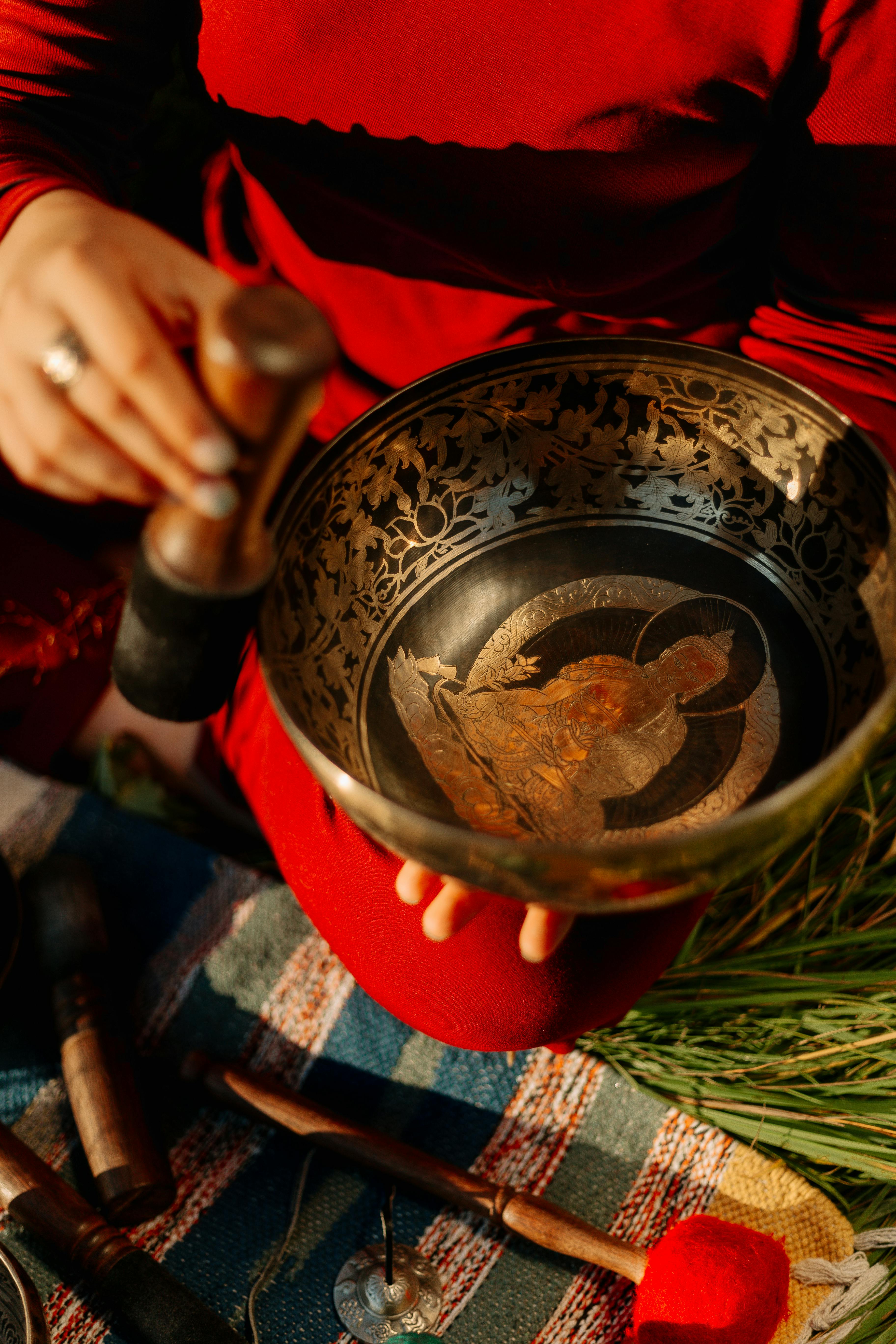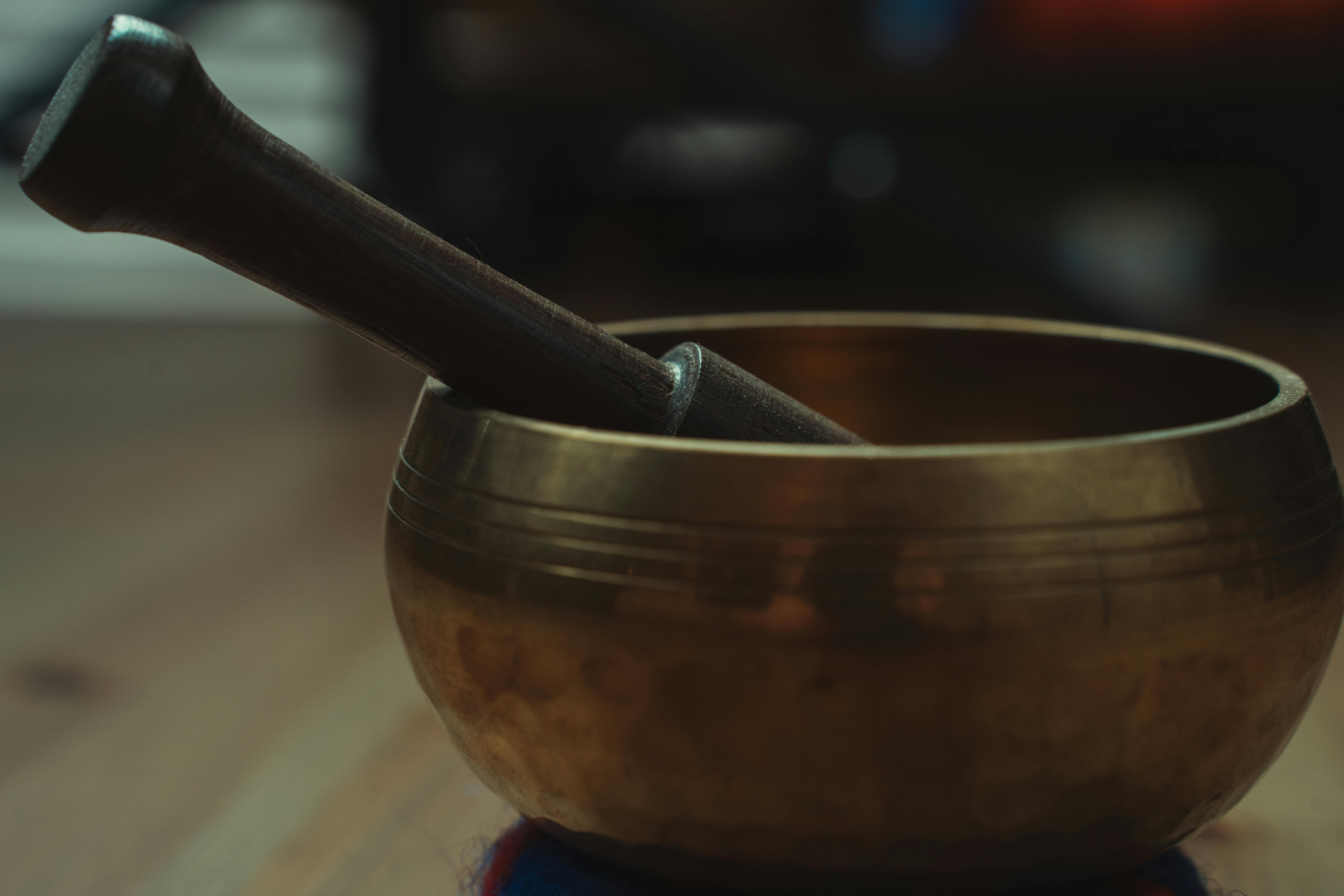
Once you have chosen a bowl, the next question is deceptively simple: how do you actually play it? Eva Rudy Jansen identifies two primary techniques, and understanding the difference between them is the foundation of everything else you will learn.

Striking: The Bell Approach
Striking means hitting the outer rim of the bowl with a padded mallet — a stick wrapped in felt, leather, or soft fabric. Hold the bowl in your non-dominant hand, resting it in your palm or on a cushion, and let the mallet fall onto the rim with a relaxed wrist. Do not "push" the sound; allow it to bloom on its own.
The tone that emerges is immediate and declarative — a single pulse that expands into overtones and then slowly decays. Striking is ideal for marking the beginning or end of a meditation, calling attention in a group setting, or producing a clear fundamental note you can listen to analytically.
A common mistake among beginners is striking too hard or too rapidly. The bowl needs a moment of silence between strokes to reveal its full character. Think of striking as introducing yourself to the bowl, not demanding a performance from it.
Rimming: The Friction Approach
Rimming — also called rubbing or circling — produces a fundamentally different sound. Using a hard wooden stick (often with a leather-wrapped tip), you press the mallet against the outer rim and move it in a steady circular motion, as though drawing a continuous line around the bowl's edge.
The analogy Jansen uses is apt: it is like wetting your finger and running it around the lip of a crystal wine glass. At first you hear only friction — a faint scratching. Then, if your pressure and speed are right, the bowl "catches" and a sustained singing tone rises out of the metal, swelling until the entire bowl vibrates audibly.
This is the sound most people associate with the name "singing bowl" — a long, shimmering note that seems to float in the air and can be modulated by varying pressure and speed.
Which Technique Should You Use?
Neither is "correct" in isolation. Many practitioners begin a session with a single strike to establish the bowl's presence, then transition to rimming for sustained meditation. Others prefer striking alone, appreciating the clarity and the natural fade into silence.
Your bowl itself will have preferences. Some antique bowls rim almost effortlessly; others respond more generously to the mallet. Experiment without agenda. Notice which technique draws you in on a given day.
Holding the Bowl Steady
For rimming especially, stability matters. Rest the bowl on a flat palm, fingertips curled slightly to prevent wobble, or place it on a rubber ring or folded cloth. If the bowl spins or tilts, the friction contact breaks and the singing tone collapses.
The mallet hand and the bowl hand work together: one provides a stable platform, the other maintains even, unhurried circles. Speed will come with practice — rushing is the most common reason a bowl refuses to sing.
Two Doors, One Instrument
Striking and rimming are not competing methods but complementary voices within the same metal vessel. Learning both gives you a fuller vocabulary — the punctuated breath of a strike and the endless exhale of a rimmed tone. Together they transform a silent bowl into an instrument capable of extraordinary nuance.