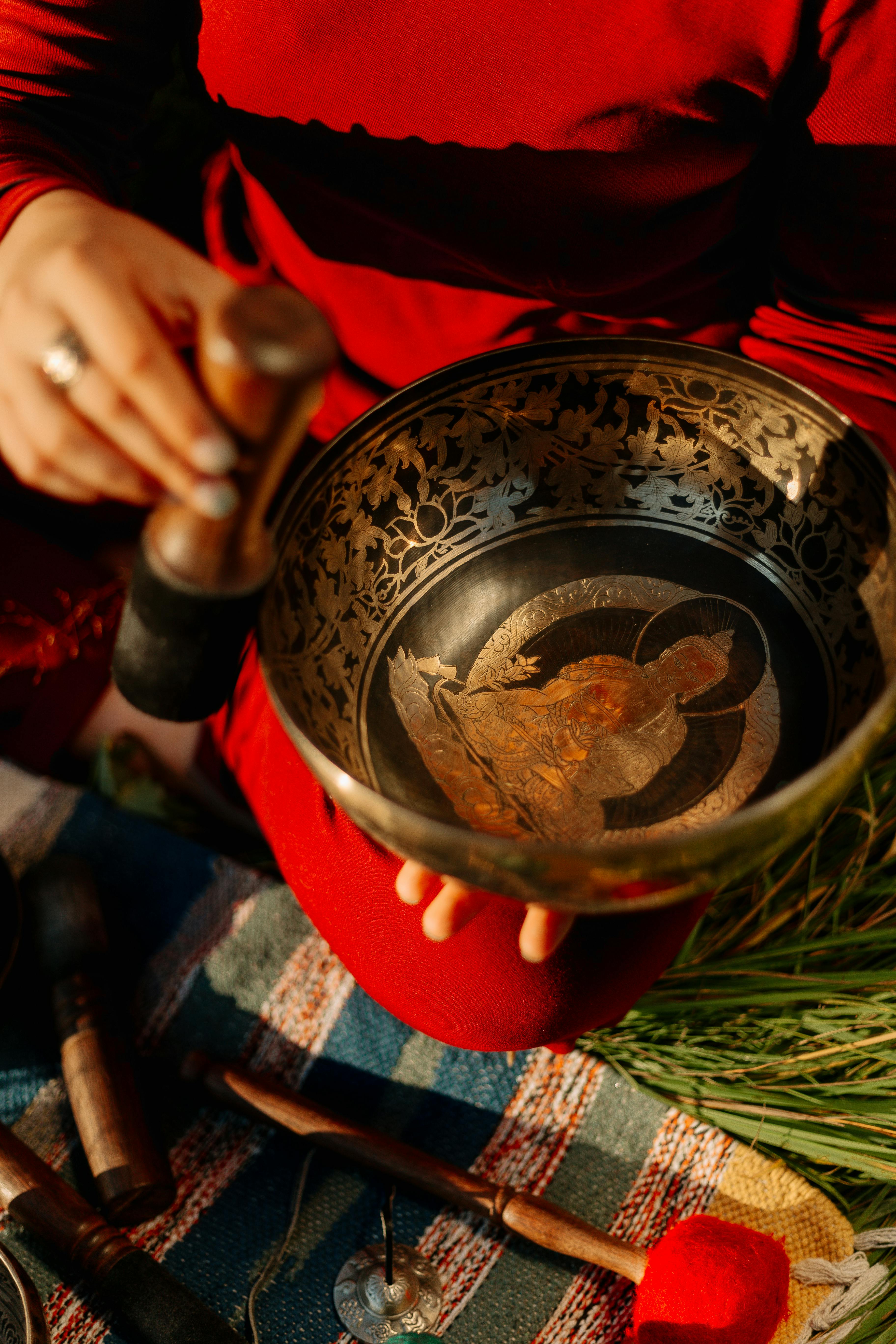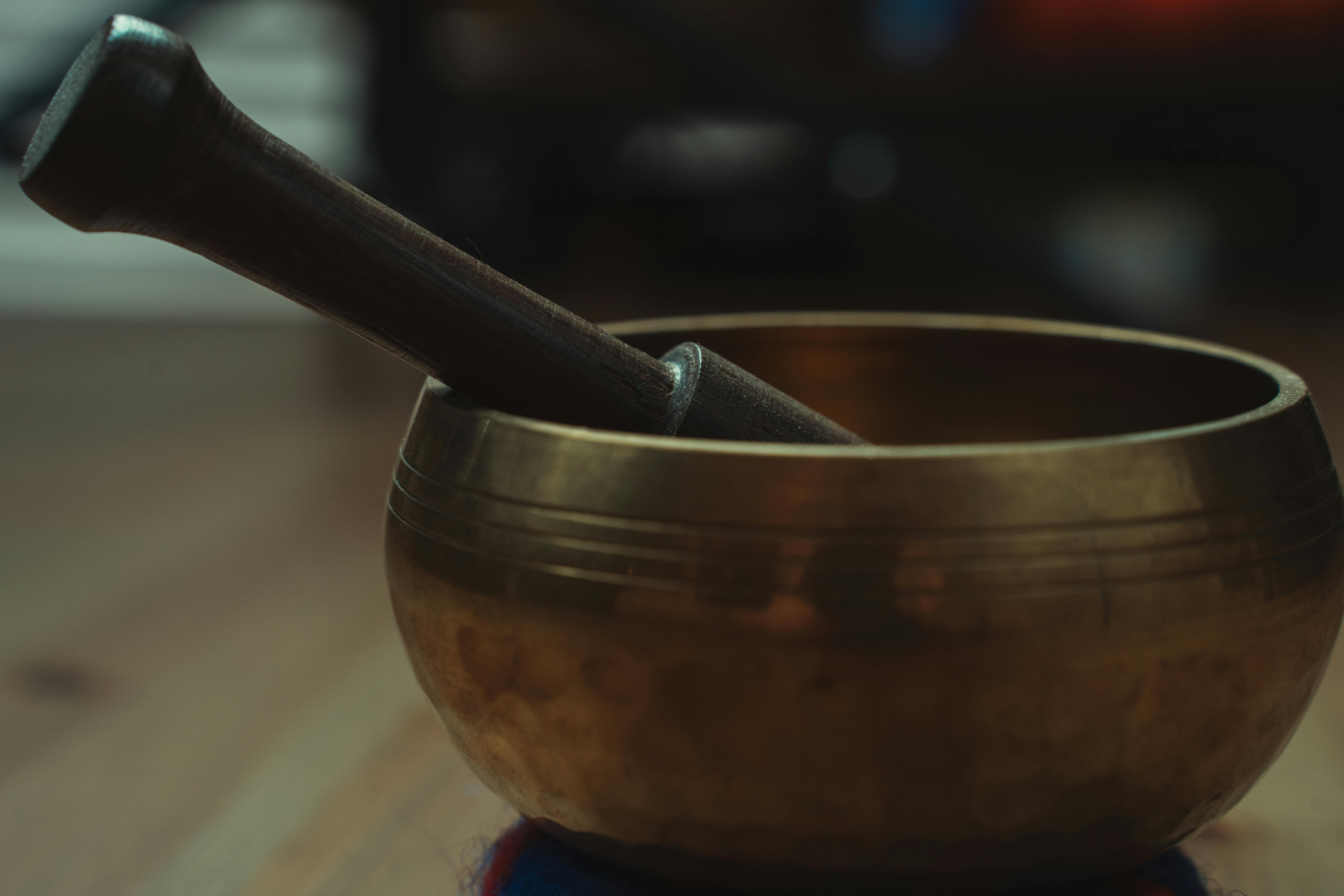
Eva Rudy Jansen treats bowl care with the same respect she brings to playing: these are living instruments, not decorative objects. The metal has its own character, developed over years of oxidation, handling, and sound. Understanding how to maintain a bowl without damaging it is part of being a responsible keeper of the instrument.

Everyday Cleaning: Less Is More
For routine care, simplicity wins:
- **After playing:** Wipe the bowl gently with a soft, dry cloth to remove fingerprints and moisture from your hands. Skin oils can accelerate tarnish on exposed metal.
- **Dust:** A dry microfiber cloth is sufficient. Hold the bowl carefully and wipe the interior and exterior without pressing hard against the rim.
- **Never use harsh chemicals.** Household cleaners, bleach, ammonia, abrasive pads, and metal polishes designed for silverware or brass fixtures should stay far away from your bowl. These strip patina, dissolve lacquer, and can etch the metal surface irreversibly.
If your bowl looks clean and sounds good, resist the urge to make it shinier. A bowl with natural patina often sounds warmer and more complex than one polished to a mirror finish.
Why Over-Polishing Changes the Sound
This is the point Jansen emphasizes most strongly: polishing is not a cosmetic choice — it is an acoustic one.
Every time you abrade the surface of a singing bowl, you remove a microscopic layer of metal. Repeated polishing gradually thins the walls, alters the bowl's weight distribution, and changes the relationship between the fundamental tone and its overtones. A bowl that has been aggressively polished may look new but sound flat, bright, and short-lived compared to its former voice.
The patina that develops on an older bowl — the darkening, the subtle texture, the areas worn smooth by decades of handling — is part of its acoustic identity. Removing it is like sanding the face of a vintage guitar: the object survives, but something essential is lost.
Preserving Lacquer
Many singing bowls, especially newer ones, are coated with a protective lacquer — a thin varnish layer that slows oxidation and gives the bowl a uniform sheen. This coating affects how the metal vibrates, and removing it changes the sound.
If your bowl has lacquer:
- **Do not use solvents** (acetone, alcohol, paint thinner) to remove tarnish or sticky residue.
- **Avoid prolonged water exposure.** Wipe dry immediately if the bowl gets wet.
- **Never machine-polish** a lacquered bowl. The heat and friction can bubble or crack the coating unevenly.
If lacquer is already chipped or peeling, consult a specialist rather than attempting a DIY fix. Partial lacquer removal creates uneven vibration across the bowl's surface.
When Cleaning Is Appropriate
There are legitimate reasons to clean more thoroughly:
- **Sticky residue** from incense, oils, or spilled liquids. Use a barely damp cloth with a drop of mild, fragrance-free soap. Wipe and dry immediately.
- **Green corrosion** (verdigris) on copper-rich bowls. This should be addressed gently with a specialist-recommended method — verdigris can be toxic if ingested and indicates active corrosion.
- **Hygiene after shared use.** In group settings or therapeutic practice, a quick wipe with a food-safe, non-abrasive cleaner followed by thorough drying is reasonable.
In all cases, test on a small, inconspicuous area first and stop if the metal reacts unexpectedly.
Storing Your Bowl Safely
How you store a bowl matters as much as how you clean it:
- **Place on a flat, padded surface** — a cloth ring, silk cushion, or dedicated bowl mat. Never store a bowl rim-down on a hard surface; the rim is the most acoustically sensitive part.
- **Avoid stacking** unless bowls are specifically designed to nest and padded between layers. The weight of one bowl on another can deform rims over time.
- **Keep away from extremes.** Direct sunlight, heating vents, damp basements, and unheated storage units can cause metal to expand, contract, and corrode.
- **Separate from other objects.** Don't store your bowl in a drawer where it can knock against jewelry, tools, or other metal items.
Mallet and Striker Care
The bowl's companions need attention too:
- **Wooden mallets:** Keep the wrapping (leather, felt, or rubber) clean and dry. Replace wrapping when it wears thin — a bare wood surface can scratch the bowl's rim.
- **Leather strikers:** Condition occasionally with a small amount of leather care product, but avoid anything that leaves a greasy residue on the bowl.
- **Store mallets horizontally** or hanging, not compressed under weight.
A well-maintained mallet protects the bowl as much as proper cleaning does.
When NOT to Polish
Jansen's rule of thumb: if the bowl sounds good, don't polish it. Specifically, avoid polishing when:
- The bowl has **natural patina** that contributes to its warm tone.
- The bowl is **antique or estimated to be over a century old** — surface character is part of its value and voice.
- You notice **inscriptions or decorative markings** — aggressive cleaning can erase them.
- The bowl has **visible hammer marks** you want to preserve as evidence of handcrafting.
- You're tempted to polish simply because the bowl "looks old" — appearance and sound quality are separate concerns.
The Long View
A singing bowl cared for with restraint can outlast its owner and pass to the next generation with its voice intact. Jansen has encountered bowls over two hundred years old that still sing beautifully — not because they were kept pristine, but because they were kept wisely.
Clean when necessary. Polish rarely, if ever. Listen always.