
A singing bowl without a mallet is like a violin without a bow: the potential is there, but it remains silent. Eva Rudy Jansen emphasizes that the relationship between bowl and striker is intimate and specific. The same bowl can sound warm and muffled with one mallet, bright and penetrating with another. Building a small collection of strikers is one of the most practical investments a bowl owner can make.
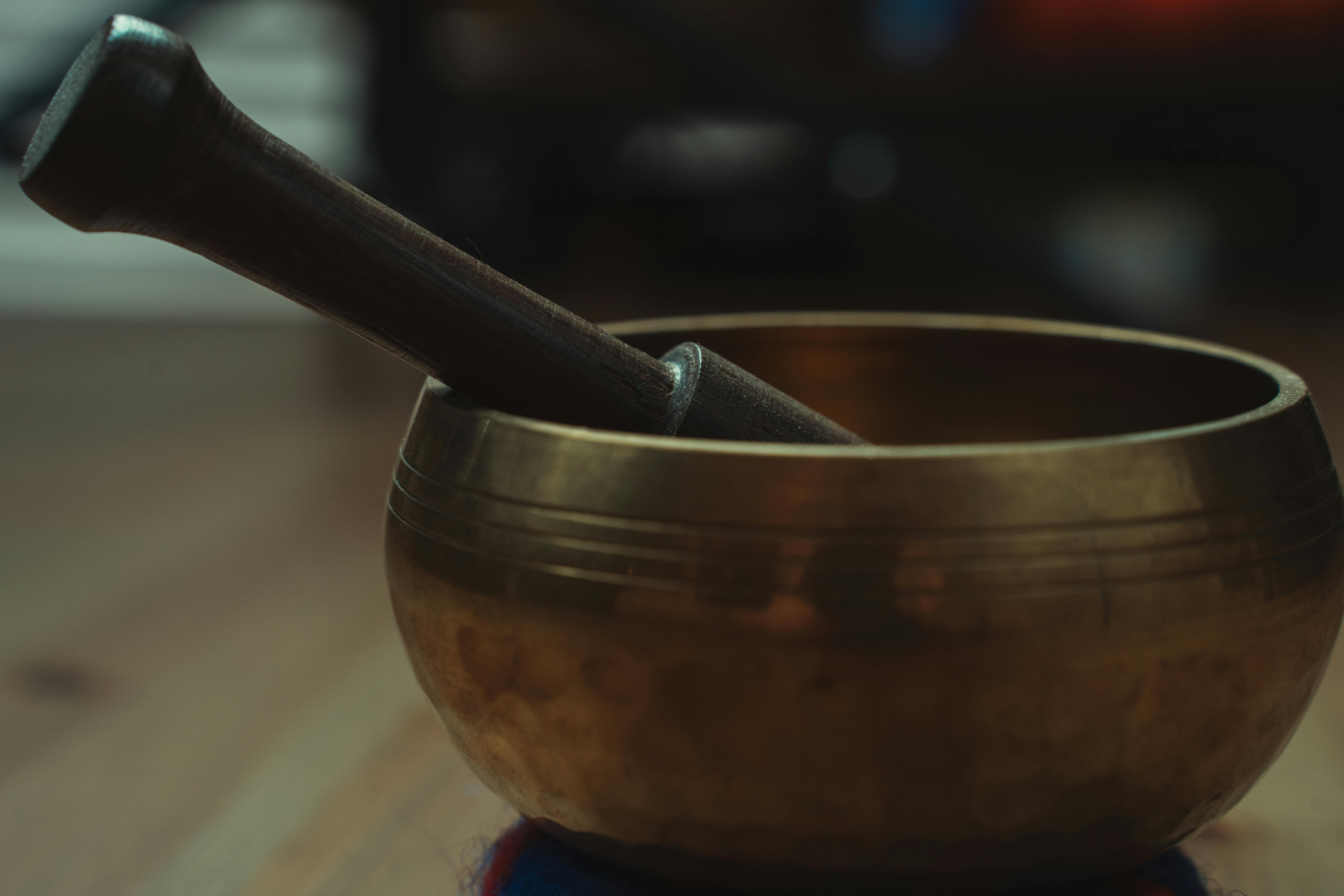
Thick Wooden or Leather-Wrapped Sticks for Rimming
The classic rimming mallet is a hardwood stick — walnut, teak, or a dense local wood — with a leather-wrapped tip. The leather provides just enough grip against the metal rim to build friction without squealing, while the wood transmits a firm, focused pressure.
These mallets tend to be thicker than striking tools, roughly the diameter of a finger or slightly more. Length varies, but most practitioners prefer a stick long enough to allow a comfortable circular motion without the hand crowding the bowl's edge.
If your bowl is large and heavy, a sturdier mallet with a wider leather pad helps maintain contact around the full circumference. Delicate antique bowls may respond better to a lighter stick with a thinner leather wrap.
Padded Felt Mallets for Striking
For the striking technique, a soft-headed mallet is essential. Felt, wrapped fabric, or compressed wool at the tip cushions the impact and draws out deep, round fundamentals rather than sharp clicks.
A well-padded felt mallet is particularly valuable for large bowls whose lower frequencies need space to develop. Striking a heavy bowl with a bare wooden stick produces a thin, clattering sound that reveals little of the instrument's true character.
Felt mallets come in various sizes. A larger head distributes force gently across a wider area of the rim; a smaller head allows more precise, localized strikes useful in therapeutic work where you target specific areas of the body.
Thin Beaters with Ball Tips
Some strikers feature a slender wooden shaft ending in a rounded ball — wood, felt, or rubber. These are versatile tools that can both strike and, in some cases, rim smaller bowls. The ball tip concentrates energy at a single point, producing a clear, bell-like attack.
They are popular in sound therapy settings where the practitioner moves quickly between multiple bowls of different sizes. The light weight reduces fatigue during long sessions.
Plain Wooden Dowels
The simplest striker is a plain wooden dowel — no padding, no leather. Used primarily for rimming, a bare wood stick produces a brighter, more articulate tone with less warmth than a leather-wrapped counterpart. Some players keep an unwrapped dowel for bowls that "clog" or sound muddy with softer materials.
Plain dowels are inexpensive and easy to replace, making them a good starting point for beginners who are still discovering what their bowl prefers.
Matching Tool to Technique and Bowl
| Tool type | Best for | Sound character | |-----------|----------|-----------------| | Leather-wrapped hardwood | Rimming | Sustained, singing, warm | | Padded felt | Striking | Deep, round, slow bloom | | Ball-tip beater | Quick strikes, small bowls | Clear, focused, bright | | Plain dowel | Rimming (bright bowls) | Articulate, less muffled |
No single mallet covers every situation. Most experienced players keep at least two: one for rimming, one for striking. If you own multiple bowls, you may find that each pairs best with a slightly different tool.
Care and Common Sense
Store mallets horizontally or hanging, not with the felt head pressed against a surface for months. Leather wraps dry out over time — a drop of leather conditioner once a year extends their life. And resist the temptation to use kitchen utensils, pencils, or anything not designed for the purpose; improvised tools can scratch the bowl's rim and produce harsh, unpredictable tones.
The right mallet does not have to be expensive or exotic. It simply has to invite the bowl to speak in the voice you most want to hear.