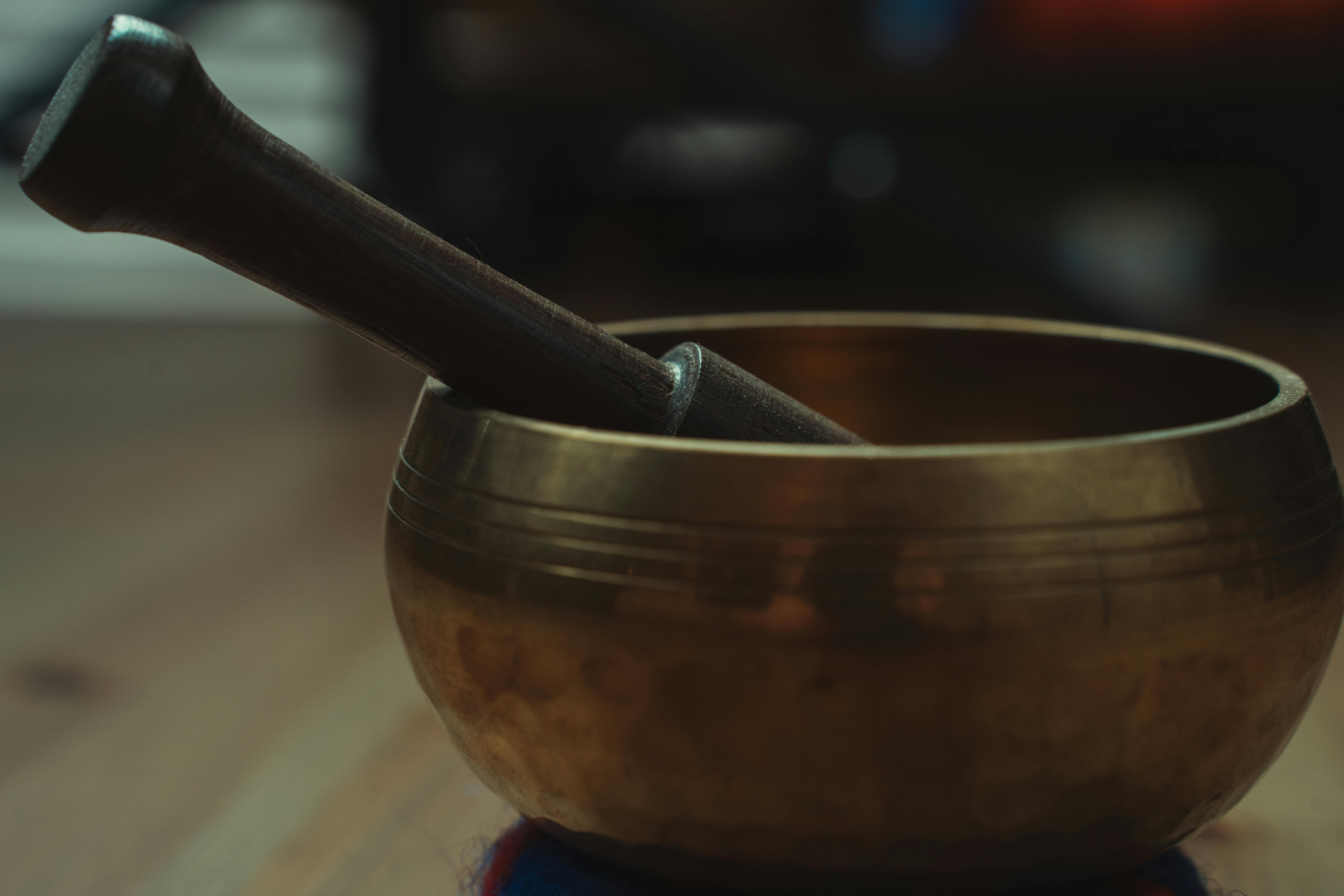
Walk into any shop that sells singing bowls and you'll hear the same words repeated: *antique*, *hand-hammered*, *seven metals*, *authentic*. Eva Rudy Jansen, who spent years traveling through Nepal and India studying these instruments, offers a refreshingly grounded perspective: the market is full of labels, but sound and craftsmanship tell the real story.
Handmade vs Machine-Made
A genuinely hand-hammered bowl carries the irregular marks of its making — tiny dents, slight asymmetry, a rim that may not be perfectly uniform. These imperfections are not flaws; they are part of what gives an individual bowl its character. The metal was worked slowly, layer by layer, and the resulting thickness varies in ways that shape the tone in subtle, often beautiful ways.
Machine-made bowls, by contrast, are spun or pressed into shape with mechanical precision. They tend to look smoother and more uniform, and they are produced in far greater numbers. Many are perfectly serviceable for meditation and sound work. But the mass-production process often produces bowls with thinner walls, less complex overtones, and a sound that fades more quickly. The difference is not always visible — it is almost always audible.
Why Antique Bowls Feel Different
Bowls described as antique — typically those estimated to be a century or more old — often have a depth and warmth that newer bowls struggle to replicate. Age brings patina: the surface oxidizes, lacquer wears in places, and the metal settles into a mature resonance. An old bowl that has been played regularly over decades may also have been "opened" by use, its tone fully developed in a way a freshly cast bowl cannot yet match.
That said, "antique" is one of the most misused words in the trade. Dealers apply it liberally, and modern bowls are sometimes artificially aged — buried, chemically treated, or hammered to look worn — to command higher prices. A bowl that looks old is not necessarily old.
Modern Production in Nepal and India
Today, the majority of singing bowls sold worldwide are made in workshops across Nepal and India. Some operations employ skilled artisans who hammer bowls by hand using traditional methods. Others use industrial processes that produce hundreds of identical bowls per day. Both countries have long metalworking traditions, and quality varies enormously within each.
Jansen notes that visiting workshops reveals a spectrum: at one end, master craftsmen working with patience and skill; at the other, assembly-line production where speed and volume take priority over sound. The country of origin alone tells you nothing about quality.
How to Identify Age and Authenticity
There is no single foolproof test, but several signs can help you read a bowl more carefully:
- **Weight and thickness.** Older hand-hammered bowls tend to be heavier for their size, with walls that feel substantial when you tap them.
- **Hammer marks.** Look for irregular, overlapping dents on the exterior — consistent, perfectly spaced marks may indicate machine work or deliberate imitation.
- **Patina.** Genuine age produces uneven oxidation and wear, especially on the base and rim. Uniform "antique" coloring across the entire surface can be a red flag.
- **Sound.** Strike the bowl and listen. An old bowl typically produces a complex, long-sustaining tone with rich overtones. A thin, bright, short-lived ring suggests newer or lower-quality manufacture regardless of appearance.
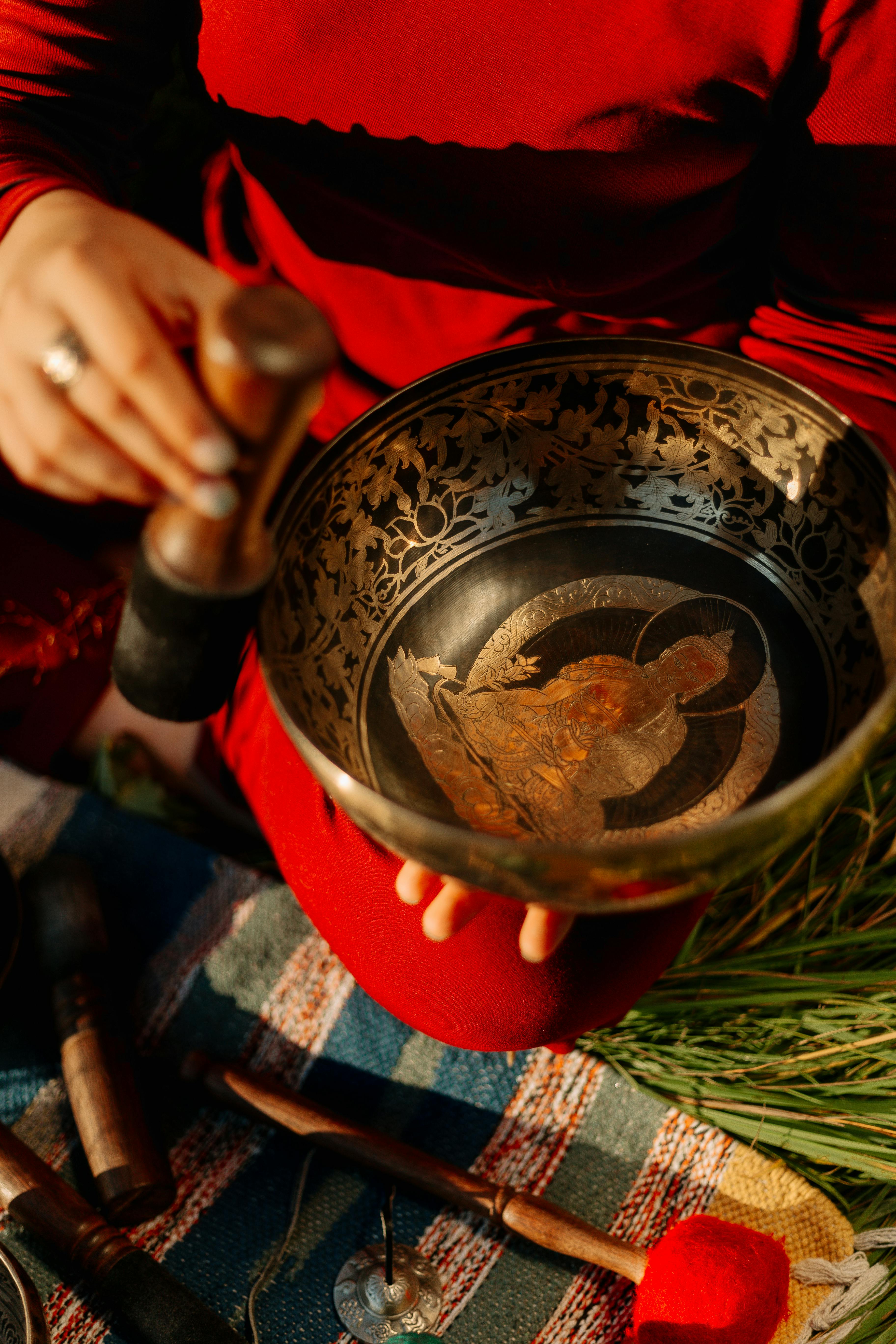
- **Inscriptions.** Sanskrit or Tibetan script on a bowl is often cited as proof of age or spiritual significance. Jansen is clear on this point: inscriptions do not guarantee better sound. Many inscribed bowls are modern productions made for the export market, and some of the finest-sounding bowls she encountered carried no markings at all.
Craftsmanship Over Labels
The most important lesson from Jansen's fieldwork is straightforward: listen before you buy, and let your ears override the sales pitch. A well-made modern bowl from a skilled artisan can outperform a mediocre "antique" bowl in every way that matters. Conversely, a genuinely old bowl with a cracked rim or uneven tone may be a beautiful object but a poor instrument.
Age, inscription, and origin are interesting context — but craftsmanship and sound are what you will live with every time you sit down to play.